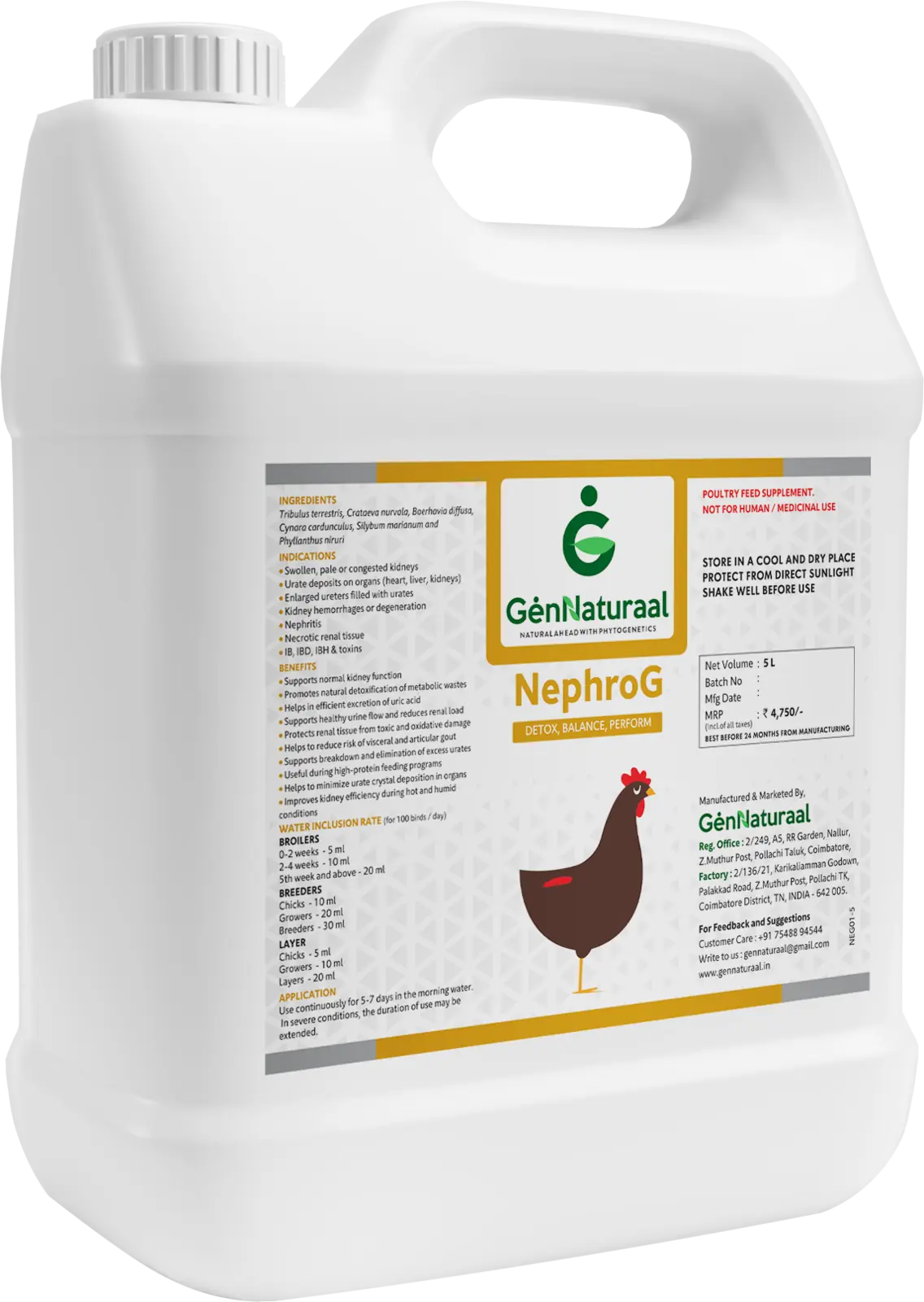
1 L
water
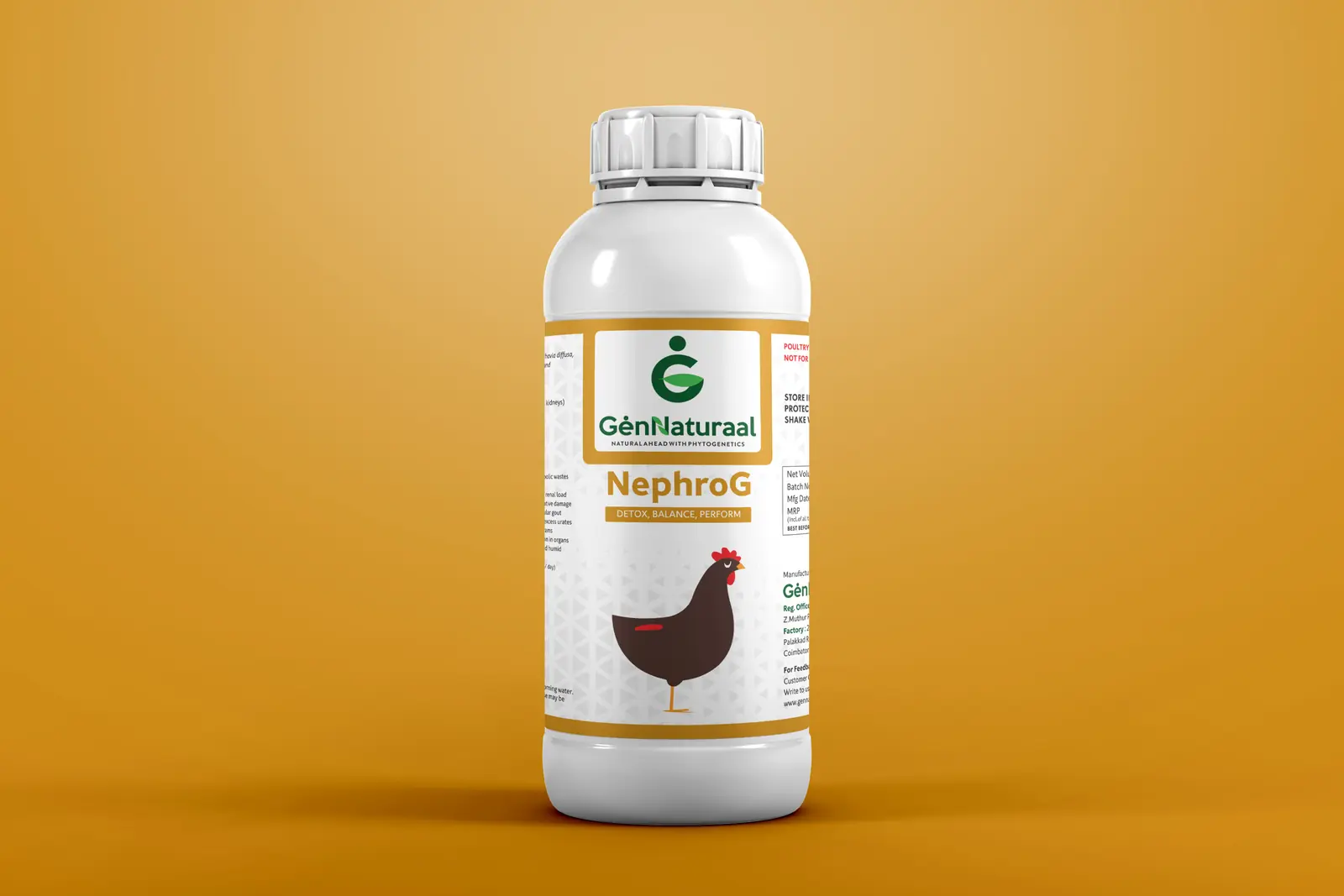
NephroG
Detox, Balance, Perform
Listed for: Phytogenic water support for renal balance and performance during detoxification pressure.
View detailsConcern guide
Kidney load shows up as wet litter, uneven intake, slower recovery and lost performance when water, salt and metabolic clearance are under pressure.
Discuss your flock
02 · Understanding the problem
The kidney works with the liver, gut and respiratory system to maintain fluid, electrolyte and metabolic balance. In poultry, high water intake, heat, dietary mineral load, mycotoxins, infectious challenge and prolonged medication can all increase renal workload. Birds may first show wet droppings, increased water-to-feed ratio, uneven flock condition or slower recovery after a production stress, rather than a single distinctive kidney sign.
Renal findings at post-mortem can include paleness, swelling or urate deposition, but these changes have several possible causes and need veterinary interpretation. Review water quality, salt and mineral balance, toxin exposure, medication history and house temperature alongside performance records. Phytogenic support can sit beside diagnosis and ration correction; it does not replace investigation of the primary load on the kidney.
03 · Signs to look for
04 · What it costs you
Wetter litter, poorer pad quality and higher ammonia risk
Lost live weight, delayed depletion or reduced egg output
Higher investigation, water-management and supportive-care costs
Greater susceptibility to further metabolic or infectious challenge
05 · The phytogenic approach
Botanical bioactives used for metabolic and organ support may assist antioxidant defence, fluid-electrolyte handling and the animal’s response to renal load.
This is supportive nutrition. Correct water quality, mineral balance and the primary exposure rather than relying on an additive to cover ongoing kidney stress.
06 · Recommended products
Delivery form, benefits and recommendation text below come directly from the GenNaturaal product records.
1 L
Detox, Balance, Perform
Listed for: Phytogenic water support for renal balance and performance during detoxification pressure.
View details07 · Suggested protocol
Select form and bird rate with your veterinarian or nutritionist. These are the product-record schedules, not a diagnosis-specific prescription.
Application: Use in drinking water as directed by a qualified veterinarian or nutritionist.
For animal feed / drinking water use only. Dosage as directed by a qualified veterinarian or nutritionist.
08 · Prevention & management tips
Further reading
7 min read
A practical introduction to plant-derived poultry additives, what they may support, and how to assess a product beyond its ingredient list.
Read article →6 min read
A careful comparison of purpose, evidence and limits—why phytogenics can support an antibiotic-reduction system but are not a simple medicine substitute.
Read article →6 min read
A prevention-first summer plan covering shed readiness, water, feeding, ventilation and flock records before and during India’s hottest months.
Read article →10 · Talk to a technical expert
Share bird age, flock size, duration, feed and water intake, mortality and recent management changes so the technical team can ask better questions.