Overview
A scientifically evolving class of plant-derived ingredients
Phytogenics represent a scientifically evolving class of plant-derived functional ingredients used to support animal health, nutrition, productivity and resilience. Derived from herbs, spices, botanical extracts, essential oils, oleoresins and purified phytochemicals, phytogenic compounds contain a diverse spectrum of biologically active molecules capable of interacting with multiple physiological and metabolic pathways.
At GenNaturaal, we translate the biological potential of plants into science-driven animal health and nutritional solutions. Our approach integrates phytochemistry, pharmacology, animal nutrition, microbiology and formulation science to identify, characterize and utilize bioactive compounds for targeted applications in poultry, livestock, aquaculture and companion animals.
That same discipline applies whether the delivery route is drinking water or feed. Water phytochemistry is the practical form of this science: plant bioactives characterised so they can be identified, standardised, mixed and used with purpose on farm.
Molecular function
From botanical knowledge to molecular-level function
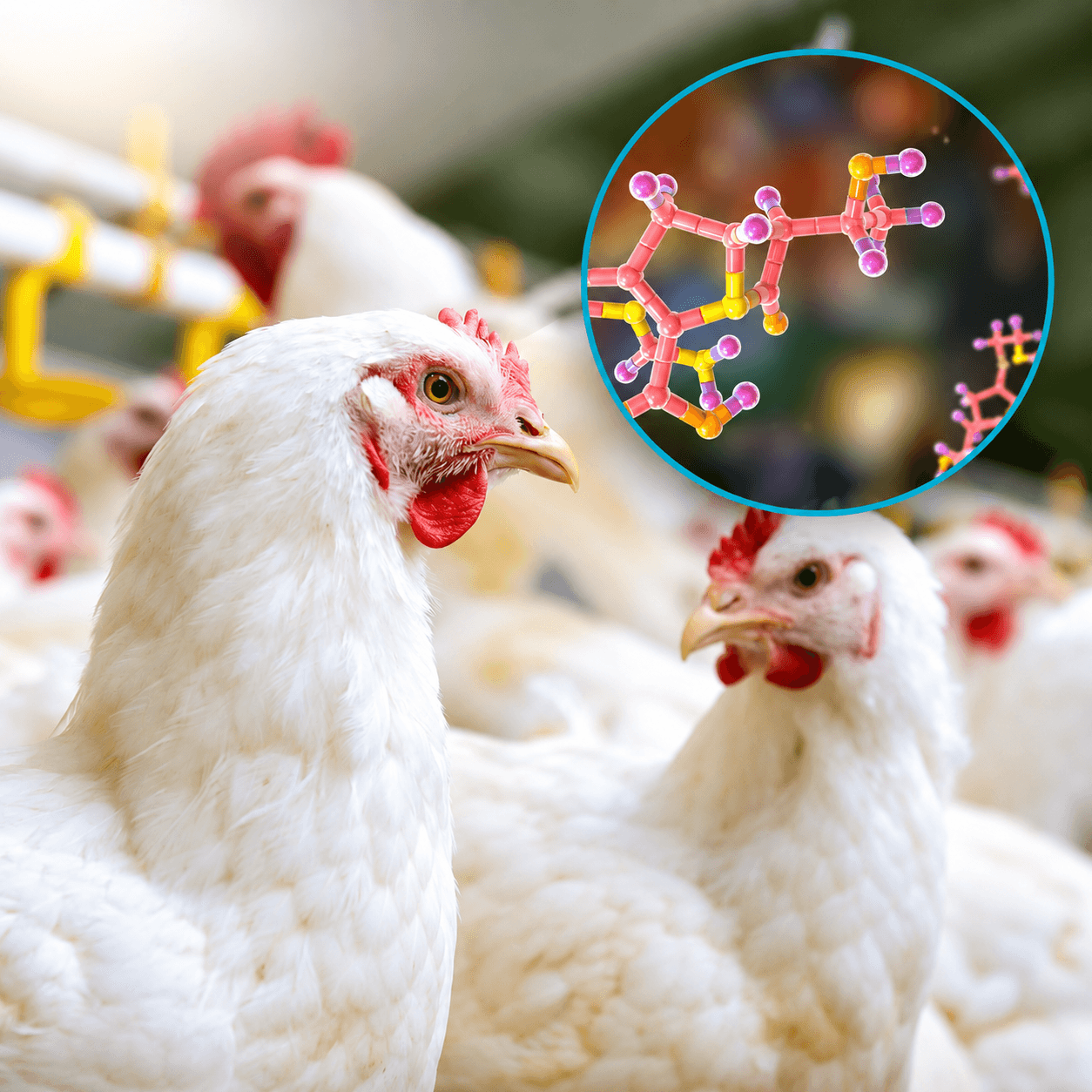
Plants produce a remarkable diversity of secondary metabolites as part of their natural defense and adaptation mechanisms. Many of these compounds exhibit biological activities relevant to animal physiology and nutrition.
Phenolic compounds and polyphenols
Flavonoids
Terpenoids and essential-oil constituents
Alkaloids
Tannins
Saponins
Organosulfur compounds
Phenolic acids
Carotenoids
Plant-derived organic and functional compounds
Representative phytochemicals such as thymol, carvacrol, cinnamaldehyde, menthol, curcumin, allicin and berberine have been investigated for their interactions with microbial populations, cellular signaling pathways, antioxidant systems, digestive processes and immune responses.
The biological response of a phytogenic ingredient depends not only on the botanical source but also on phytochemical profile, concentration, standardization, extraction technology, bioavailability, stability, synergistic interactions and target species.
Therefore, our philosophy is not simply “using herbs”—it is the scientific identification, standardization and application of functional plant bioactives.
Physiology
How phytogenics support animal health
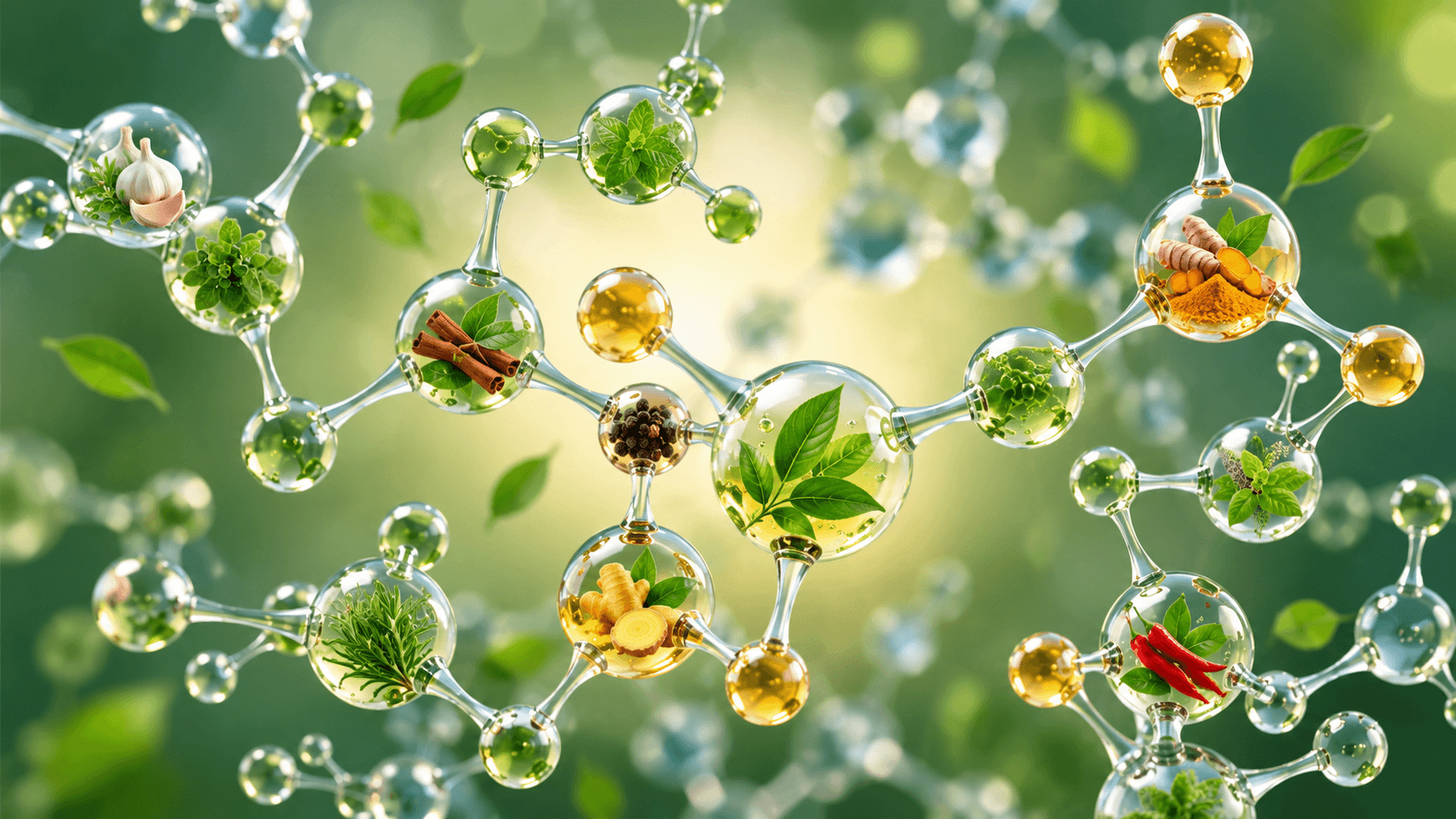
Phytogenic compounds can influence several interconnected physiological systems. Their multifunctional nature makes them particularly relevant for modern animal production, where gut health, immunity, metabolism, oxidative balance and nutrient utilization are closely linked.
1. Gut microbial modulation
The gastrointestinal tract is a highly complex ecosystem in which the interaction between the host, intestinal microbiota and diet plays a central role in animal health. Selected phytogenic compounds may influence microbial populations through mechanisms including:
- Interaction with microbial cell membranes
- Alteration of membrane permeability
- Disruption of cellular energy metabolism
- Modulation of microbial enzyme activity
- Interference with microbial adhesion and colonization
- Influence on microbial communication and biofilm-associated processes
2. Intestinal barrier and gut integrity
A functional intestinal barrier is essential for efficient nutrient absorption and protection against undesirable luminal challenges. Phytogenic bioactives may support intestinal integrity through effects on:
- Tight-junction proteins
- Epithelial cell function
- Mucosal integrity
- Oxidative balance
- Inflammatory signaling
- Intestinal permeability
3. Digestive function and nutrient utilization
Certain botanical compounds and essential-oil components may influence digestive physiology by supporting:
- Digestive secretions
- Enzymatic activity
- Bile flow and lipid digestion
- Gastrointestinal motility
- Nutrient utilization
- Feed palatability
4. Antioxidant and cellular protection
Modern production animals are exposed to multiple sources of oxidative challenge, including environmental stress, metabolic intensity, nutritional imbalance and physiological transitions. Plant-derived polyphenols and other bioactive compounds may participate in antioxidant defense by:
- Scavenging reactive oxygen species
- Supporting endogenous antioxidant systems
- Modulating oxidative-stress signaling
- Protecting cellular membranes from lipid peroxidation
- Supporting mitochondrial and cellular homeostasis
5. Immune modulation
The immune system is closely interconnected with intestinal health, oxidative status and metabolic function. Selected phytogenic compounds may influence immune homeostasis through modulation of:
- Cytokine signaling
- Inflammatory pathways
- Cellular antioxidant responses
- Innate immune mechanisms
- Mucosal immune function
6. Liver and metabolic support
The liver is a central organ for nutrient metabolism, detoxification, lipid metabolism, protein metabolism and biotransformation. Botanical bioactives may support hepatic function by interacting with:
- Antioxidant defense pathways
- Hepatic metabolic processes
- Lipid metabolism
- Cellular membrane stability
- Endogenous detoxification mechanisms
7. Respiratory and systemic health
Certain essential oils and botanical compounds have demonstrated biological activities relevant to respiratory and systemic health. Their potential mechanisms include:
- Modulation of microbial interactions
- Support of mucosal defenses
- Antioxidant activity
- Influence on inflammatory responses
- Support of normal respiratory tract function
8. Reproductive health
Phytoactives support reproductive performance through oxidative balance, endocrine signaling, metabolism, ovarian function and reproductive-tract health.
- Healthy follicle development and ovulation
- Normal reproductive hormone activity
- Protects reproductive cells from oxidative stress
- Supports consistent production and egg quality
- Supports spermatogenesis, sperm motility and semen quality
- Maintains reproductive efficiency
This biological activity can contribute to a more favorable intestinal microbial environment, digestive efficiency and overall animal performance when appropriately formulated and applied. Rather than simply stimulating immunity, our scientific approach emphasizes immune balance and physiological resilience.
The science of synergy
One of the distinctive characteristics of phytogenic formulations is the potential for multi-component and multi-target activity. A carefully designed combination of botanical extracts and phytochemicals may act through complementary biological pathways rather than relying on a single active molecule.
This concept of functional synergy forms an important foundation of our product-development philosophy. However, synergy should be scientifically demonstrated rather than assumed. Therefore, formulation design should consider dose-response relationships, compatibility, pharmacological activity, stability, bioavailability and species-specific responses.
In water programmes this matters even more. Dose, mixing order, contact time and compatibility with other tank treatments decide whether a bioactive reaches the bird in the form the formulation intended.
Standardization: the foundation of phytogenic consistency
The efficacy of a botanical product depends significantly on the consistency of its active constituents. Therefore, botanical identification, raw-material qualification, marker-compound analysis and phytochemical standardization are critical components of reliable phytogenic product development.
At GenNaturaal, we emphasize a quality-by-design approach, connecting raw-material identity and phytochemical composition with formulation specifications and intended biological function.
Natural raw materials can vary according to
- Botanical species and variety
- Geographic origin
- Soil and climatic conditions
- Harvesting stage
- Processing conditions
- Extraction method
- Storage conditions
Mechanism-driven product development
Our R&D philosophy begins with a biological question: what physiological or nutritional challenge are we trying to address? We then evaluate candidate plant sources, relevant phytochemicals, plausible mechanisms, formulation constraints, delivery route and species-specific application. This approach enables the development of targeted solutions for areas such as:
Gut health
Digestive efficiency
Liver function
Immune support
Oxidative stress
Respiratory health
Mycotoxin-associated challenges
Reproductive performance
Egg production and quality
Nutrient utilization
Stress management
Growth and production efficiency
Phytogenics for a sustainable animal production system
The future of animal production requires solutions that combine productivity, animal wellbeing, resource efficiency and sustainability. Phytogenic technologies can contribute to this objective by supporting physiological efficiency and reducing dependence on purely conventional approaches where appropriate. Their potential applications extend across:

Poultry
Gut health, feed efficiency, liver support, immune resilience, respiratory support, egg production, egg quality and reproductive performance.

Livestock
Digestive efficiency, rumen function, metabolic support, immune resilience and production performance.
Aquaculture
Gut health, hepatopancreatic function, immunity, stress management, feed utilization and overall robustness.

Companion animals
Digestive health, liver support, immunity, skin and coat nutrition, antioxidant support and general wellbeing.
Our scientific philosophy
Nature provides the molecules. Science defines their function.
At GenNaturaal, we believe the future of phytogenics lies at the intersection of nature and modern science. Our objective is to move beyond conventional herbal formulations and develop defined, standardized and function-oriented phytogenic solutions supported by scientific rationale.
From botanical raw-material selection to phytochemical characterization, formulation development and application strategy, we focus on establishing a clear connection between plant, phytochemical, isolation, molecular target, biological pathway, physiological response and animal performance.
This scientific framework enables us to transform the complexity of nature into reproducible, practical and application-oriented animal health and nutrition solutions. Innovation then turns that science into products farms can use.
Advancing phytogenic science for a healthier, more efficient and sustainable animal production future.
Explore products